Beginning with Advertising campaign metrics and KPIs, the narrative unfolds in a compelling and distinctive manner, drawing readers into a story that promises to be both engaging and uniquely memorable.
Understanding the importance of tracking metrics and KPIs in advertising campaigns is key to evaluating success and optimizing strategies for better results. This guide delves into essential metrics, setting KPIs, data analysis, measuring ROI, and leveraging advertising services to enhance campaign impact.
Importance of Advertising Campaign Metrics and KPIs
Tracking metrics and Key Performance Indicators (KPIs) is crucial for advertising campaigns as it provides valuable insights into the effectiveness of the strategies being implemented. By analyzing these data points, marketers can make informed decisions, optimize campaigns, and allocate resources more efficiently.
Evaluating Campaign Success
Metrics play a vital role in evaluating the success of an advertising campaign. For example, measuring metrics like click-through rates, conversion rates, and return on investment (ROI) can help determine the impact of the campaign on the target audience. Tracking these metrics allows marketers to identify what is working well and what needs improvement.
Impact of Using KPIs
- KPIs provide a clear benchmark for measuring the effectiveness of different advertising strategies. By setting specific KPIs, marketers can track progress towards their goals and adjust their strategies accordingly.
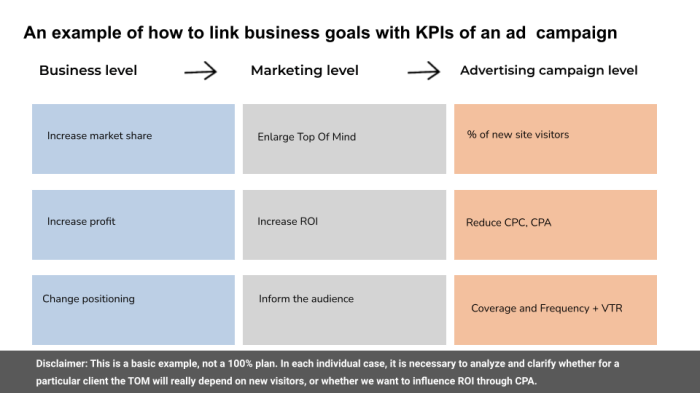
- Using KPIs helps in aligning the marketing efforts with the overall business objectives. It ensures that the advertising campaigns are contributing to the company’s bottom line and driving tangible results.
- By analyzing KPIs, marketers can gain valuable insights into consumer behavior, preferences, and trends. This data can be used to refine targeting, messaging, and creative elements of the campaign for better performance.
Key Advertising Campaign Metrics
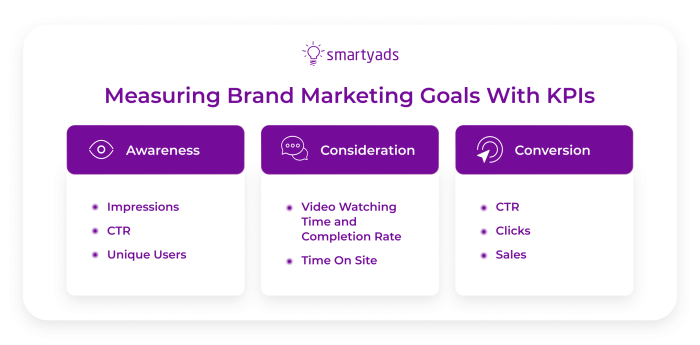
When it comes to measuring the success of advertising campaigns, there are several key metrics that marketers rely on to evaluate performance and make informed decisions. These metrics provide valuable insights into the effectiveness of the campaigns and help in optimizing strategies for better results.
One of the essential metrics used in advertising campaigns is the click-through rate (CTR). CTR measures the percentage of people who click on an ad after seeing it. A high CTR indicates that the ad is relevant and engaging to the target audience, while a low CTR may signal that adjustments are needed to improve performance.
Click-Through Rate (CTR)
- CTR = (Number of Clicks / Number of Impressions) x 100
- A high CTR indicates that the ad is resonating with the audience and driving traffic to the desired destination.
- Low CTR may suggest that the ad creative, targeting, or placement needs to be optimized for better performance.
Conversion Rate
- Conversion rate measures the percentage of users who take a desired action after clicking on an ad, such as making a purchase or signing up for a newsletter.
- Conversion rate = (Number of Conversions / Number of Clicks) x 100
- A high conversion rate indicates that the ad is effectively driving actions that align with the campaign’s goals.
Return on Ad Spend (ROAS)
- ROAS is a metric that calculates the revenue generated for every dollar spent on advertising.
- ROAS = Revenue from Ad Campaign / Cost of Ad Campaign
- A high ROAS indicates that the campaign is delivering a positive return on investment, while a low ROAS may require adjustments to improve profitability.
Setting KPIs for Advertising Campaigns
Setting Key Performance Indicators (KPIs) for advertising campaigns is crucial for measuring the success of your marketing efforts. KPIs should be specific, measurable, achievable, relevant, and time-bound to provide a clear direction and focus for your campaigns.
Examples of Common KPIs in Advertising
- Click-Through Rate (CTR): Measures the percentage of people who clicked on your ad after seeing it.
- Conversion Rate: Tracks the percentage of users who completed a desired action, such as making a purchase or signing up for a newsletter.
- Return on Ad Spend (ROAS): Calculates the revenue generated for every dollar spent on advertising.
- Cost per Acquisition (CPA): Determines the cost of acquiring a new customer through advertising.
- Brand Awareness: Assesses the level of recognition and recall of your brand among your target audience.
Aligning KPIs with Business Objectives
Setting KPIs that align with your overall business objectives is essential for driving campaign success. By ensuring that your KPIs are directly tied to your business goals, you can measure the effectiveness of your advertising campaigns in achieving those objectives. For example, if your goal is to increase sales, your KPIs could focus on conversion rates and revenue generated from the campaign.
This alignment helps you stay focused on what truly matters for your business and allows you to track progress effectively.
Analyzing Data from Advertising Campaigns
When it comes to running successful advertising campaigns, analyzing data is crucial for measuring the effectiveness of your strategies and making informed decisions for the future.
By analyzing the data collected from advertising campaigns, businesses can gain valuable insights into consumer behavior, preferences, and engagement with their ads. This information allows companies to understand what is working well and what areas need improvement.
Interpreting Data for Informed Decisions
Interpreting data from advertising campaigns involves looking at key metrics such as click-through rates, conversion rates, and return on ad spend. By analyzing these metrics, businesses can determine which ads are resonating with their target audience and driving the desired actions.
It is essential to compare data across different campaigns, channels, and time periods to identify trends and patterns that can help refine advertising strategies. This analysis enables companies to optimize their ad spend, targeting, and messaging for better results.
Actionable Insights for Improving Advertising Strategies
Data analysis can lead to actionable insights that drive improvements in advertising strategies. By understanding the performance of past campaigns, businesses can make data-driven decisions on future initiatives.
For example, if a particular ad creative or messaging style consistently outperforms others, companies can use this insight to inform their content strategy for upcoming campaigns. Likewise, if a specific audience segment shows higher engagement rates, businesses can tailor their targeting to reach similar prospects more effectively.
Measuring ROI in Advertising Campaigns
Return on Investment (ROI) is a crucial metric in advertising campaigns as it measures the profitability of the campaign in relation to the cost of investment. It helps advertisers understand how effectively their advertising efforts are generating revenue.
Calculating ROI for Advertising Campaigns
Calculating ROI involves comparing the revenue generated from the campaign to the cost of running the campaign. The formula for calculating ROI is:
ROI = (Revenue – Cost of Campaign) / Cost of Campaign
By analyzing this metric, advertisers can determine whether the campaign is generating enough revenue to justify the investment made.
Assessing Profitability of Ad Campaigns
- Determine the revenue generated directly from the campaign.
- Calculate the total cost of the campaign, including creative, media buying, and other expenses.
- Compare the revenue to the costs to calculate the ROI percentage.
- Consider additional factors such as customer lifetime value and brand awareness impact on ROI.
Role of ROI in Advertising Success
ROI plays a critical role in determining the overall success and effectiveness of advertising efforts. It helps advertisers make informed decisions about future campaigns, budget allocation, and marketing strategies. By measuring ROI, advertisers can optimize their advertising spend and maximize the return on their investment.
ADVERTISING CAMPAIGN ADVERTISING SERVICE
Advertising services play a crucial role in the successful execution of advertising campaigns. These services encompass a range of activities and strategies aimed at promoting a brand or product to a target audience.
Businesses have access to different types of advertising services that cater to their specific needs and objectives. These services can include but are not limited to:
Types of Advertising Services
- 1. Digital Advertising: This includes online ads, social media campaigns, and search engine marketing to reach audiences on digital platforms.
- 2. Traditional Advertising: This involves print ads, radio commercials, television spots, and billboards to target audiences through traditional media channels.
- 3. Creative Services: Creative agencies provide services like graphic design, copywriting, and video production to develop compelling ad content.
- 4. Media Buying: Media buying agencies help businesses purchase ad space and negotiate rates for optimal placement of ads.
By leveraging advertising services, businesses can enhance the reach and impact of their advertising campaigns. These services bring expertise, creativity, and industry knowledge to the table, helping businesses connect with their target audience effectively and drive desired outcomes.
In conclusion, mastering advertising campaign metrics and KPIs is crucial for driving successful campaigns. By aligning KPIs with business objectives and analyzing data effectively, businesses can make informed decisions that lead to improved advertising strategies and overall success.
Q&A
What are some examples of common KPIs used in the advertising industry?
Common KPIs include brand awareness, customer acquisition cost, customer lifetime value, and return on investment.
How can data analysis from advertising campaigns lead to actionable insights?
By analyzing data, businesses can identify trends, consumer preferences, and areas for improvement, allowing them to make strategic decisions for future campaigns.
What role does ROI play in determining the success of advertising efforts?
ROI measures the profitability of ad campaigns and helps businesses understand the effectiveness of their advertising strategies in generating revenue and achieving objectives.


